Why Industrial Data Integration Demands a Unified Namespace
The Real Problem With Connecting Factory Data
Walk through any manufacturing plant built up over the past two decades and you will see a tangle of systems. PLCs from different vendors, SCADA terminals running on legacy protocols, edge computing nodes that collect sensor readings, and a data lake somewhere in the cloud that nobody trusts completely. The term "industrial data integration" gets thrown around as if it were a solved problem, a simple matter of plugging cables and mapping fields. Anyone who has spent time on the plant floor knows otherwise. The real challenge is not just moving data from point A to point B. It is making sure that data means the same thing everywhere it lands.
Most factories have spent years building point-to-point connections. A temperature reading from an oven goes through an OPC-UA server, gets transformed by an ETL script, lands in a time-series database, and eventually appears on a dashboard. The dashboard shows a number, but the engineer who built the pipeline knows the reading is off by two degrees because of a rounding error three hops upstream. That kind of drift accumulates. It undermines machine learning models that try to predict equipment failures. It makes smart manufacturing initiatives stall because nobody can trust the inputs.
How a Unified Namespace Changes the Game
This is where the idea of a Unified Namespace becomes more than a buzzword. Instead of treating each data source as an island that needs custom bridges, a Unified Namespace gives every piece of data a single, consistent address and meaning. In an industrial setting, that means a temperature sensor at a specific location always publishes its value to the same topic, in the same format, regardless of whether the consumer is a SCADA system, an edge analytics engine, or a cloud-based data mesh. The protocol that makes this practical today is MQTT, especially with the Sparkplug specification that adds semantics and discovery on top of the basic publish-subscribe model.
I have seen companies try to retrofit a Unified Namespace onto existing infrastructure, and it works when they commit to it. The alternative is to keep layering ETL pipelines on top of ETL pipelines until the data fabric becomes a brittle web of scripts that nobody dares to touch. That approach might work for quarterly reports, but it fails under the demands of real-time data. When a machine on the line starts vibrating at a frequency that suggests an imminent bearing failure, you need that information to reach the maintenance team within seconds, not after it has been batched, transformed, and loaded into a data lake overnight.
Industrial Data Integration vs. Enterprise Data Management
There is a persistent confusion between industrial data integration and Enterprise Data Management. Enterprise Data Management usually deals with business systems: ERP, CRM, HR databases. Those systems run on schedules, batch jobs, and transactional consistency. Industrial data behaves differently. It is continuous, high-velocity, and time-sensitive. A single stamping press can generate thousands of readings per second. Trying to funnel that through traditional enterprise tools built for order records is a recipe for latency and data loss.
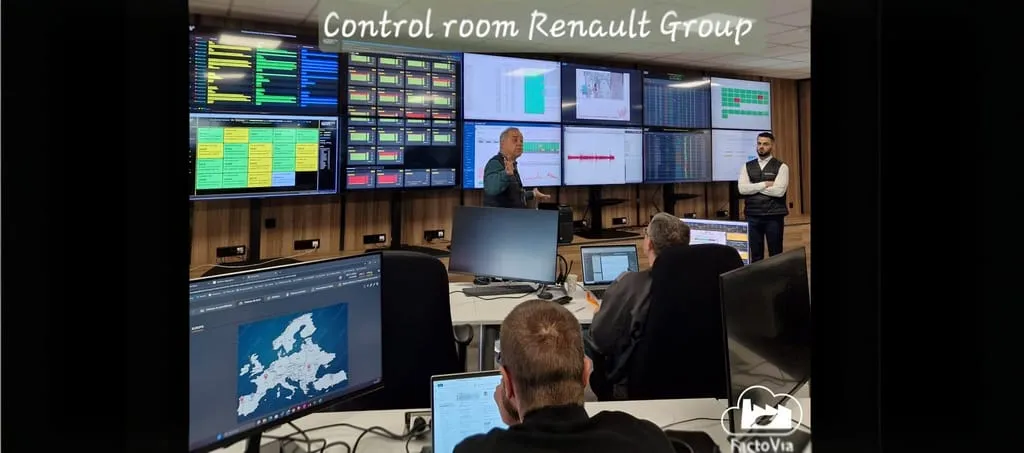
Industrial IoT has forced a convergence. IT-OT convergence is not just a nice phrase; it is a practical necessity when the same network carries both a production order and a vibration reading from a motor. The problem is that OT engineers have spent decades working with deterministic protocols like OPC-UA, while IT teams are comfortable with REST APIs and JSON payloads. A Unified Namespace built on MQTT with Sparkplug can bridge that gap without forcing either side to abandon its core practices. The OT team keeps its real-time control, and the IT team gets the structured, self-describing data it needs for analytics and dashboards.
Where the Old Approaches Fall Short
I have consulted with facilities that invested heavily in data lakes, expecting them to solve the integration problem. They poured every SCADA log, every PLC register, and every edge computing stream into a massive repository. What they got was a data swamp. Without a shared semantic layer, the time-series data from one production line looked different from the time-series data from another line, even when they measured the same physical quantity. The data lake became a place where data went to die, not a resource for decision-making.
Data mesh architectures try to address this by letting domain teams own and serve their data, but a mesh still needs a common language. Otherwise, each domain team publishes its own schema, and the consumers have to write adapters for every source. That is not integration; it is distributed fragmentation. A Unified Namespace provides the common language that makes a data mesh work in an industrial context.
What Practical Integration Looks Like
Consider a factory that runs a dozen injection molding machines. Each machine has its own PLC, and the PLCs come from three different vendors. The old way would be to write separate connectors for each vendor, map the register addresses to a common schema, and hope that the mappings stay correct after the next firmware update. The better approach is to install an edge gateway that speaks OPC-UA to each machine and then publishes the relevant values to an MQTT broker using Sparkplug. The broker becomes the Unified Namespace. Any application that needs to know the mold temperature, cavity pressure, or cycle count subscribes to the appropriate topic. The integration is done once, at the edge, and every consumer gets the same data in the same format.

That shift from point-to-point integration to a hub-and-spoke model is what makes industrial data integration sustainable. It also enables capabilities that were previously too expensive to attempt. For example, you can run machine learning models on the aggregated stream to detect anomalies across the entire fleet, not just on a single machine. You can feed real-time data into a digital twin and compare it against the expected behavior. You can build dashboards that show the health of every machine on the floor without a team of data engineers maintaining dozens of custom pipelines.
The Role of Data Governance in Real-Time Environments
Data governance becomes a different animal when data is moving in real time. In a batch-oriented world, you can run a quality check after the data is loaded. In a real-time environment, the data needs to be trustworthy the moment it arrives. A Unified Namespace helps here because it enforces a consistent structure at the point of publication. If every temperature reading is published with a well-defined quality flag and a timestamp from the source, the consuming applications do not have to guess whether the value is stale or out of range.
Smart manufacturing depends on this level of trust. An automated decision, like diverting a defective part off the line, cannot wait for a human to validate the data. The system has to act on the data as it arrives, and it can only do that if the data is reliable. That is why Industry 4.0 initiatives often stall at the integration layer. The vision of fully connected, adaptive factories is compelling, but the plumbing has to be right first.
Looking Ahead Without Overpromising
Industrial data integration is not a product you buy and install. It is a discipline that requires architecture decisions, protocol choices, and a willingness to standardize how data is named and structured. A Unified Namespace built on MQTT and Sparkplug gives you a practical foundation, but it still takes work to map existing equipment and processes into that framework. The payoff is that once the namespace is in place, every new device, every new application, and every new analytics model can plug in without reinventing the integration.

The factories that get this right will be the ones that treat their data as a first-class asset, not as a byproduct of production. They will be able to respond to changing demand, detect problems before they become failures, and continuously improve their operations. The rest will keep fighting fires in their ETL scripts and wondering why their digital transformation never quite delivers.